
Why This Is Important
Royalty is the fee oil and gas companies pay to the government for extracting natural resources.
When royalty rates are reduced:
- Companies retain a larger share of revenue
- Profit margins improve
- Cash flow becomes stronger
- Exploration projects become more financially attractive
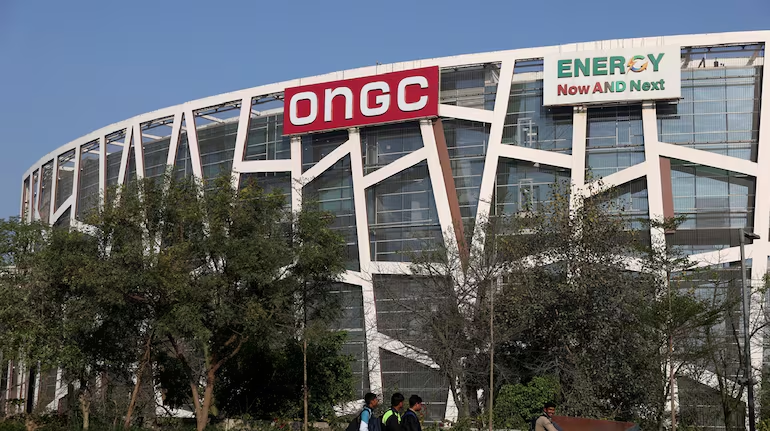
This directly benefits upstream energy companies like ONGC and Oil India.
Why the Market Reacted Positively
Brokerage firm CLSA believes the move could:
- Encourage more domestic oil & gas exploration
- Boost production activity in India
- Attract fresh investments into the sector
- Reduce India’s dependence on imported crude oil
Investors also see immediate financial benefits:
- Better earnings outlook
- Higher retained profits
- Increased ability to invest in exploration and expansion
- Improved viability of difficult or low-output oil fields
Crude Oil Prices Add Another Boost
The rally became stronger because global crude oil prices are already above $100 per barrel amid Middle East tensions.
This creates a double advantage for upstream producers:
- Higher selling prices for oil
- Lower royalty burden
That combination can significantly improve profitability in the near term.
Companies Likely to Benefit
- Oil and Natural Gas Corporation
- Oil India Limited
- Oilfield services and exploration-related companies
Risks Investors Still Need to Watch
Despite the positive outlook, some concerns remain:
- Crude oil price volatility
- Possible future windfall taxes
- Government policy changes
- Global economic slowdown affecting oil demand
Overall View
The policy is being seen as a major positive for India’s upstream oil and gas sector.
If supported by stable crude prices and continued reforms, it could strengthen domestic production, improve energy security, and boost profitability for companies like ONGC and Oil India.
