
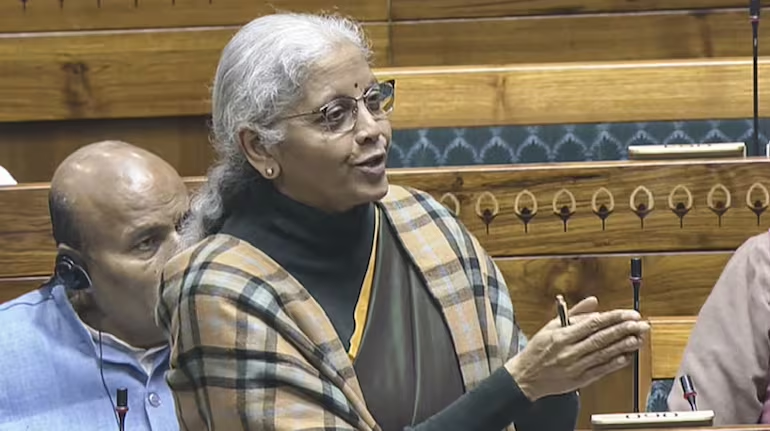
The Securities Market Code Bill was introduced in the Lok Sabha on December 18, 2025, aiming to consolidate and modernise India’s capital market regulations. The proposed legislation seeks to replace multiple existing laws with a single, comprehensive framework to improve regulatory clarity, governance, and ease of doing business in the securities market.
Key Reform: Expansion of SEBI Board
One of the most significant proposals in the Bill is the expansion of the SEBI Board.
The number of board members is proposed to be increased to a maximum of 15, from the current limit of 9 members under the SEBI Act. The move is intended to strengthen regulatory oversight, enhance diversity of expertise, and improve decision-making at the market regulator.
Unified Regulatory Framework
The Securities Market Code Bill aims to merge and streamline provisions from multiple laws governing capital markets, including regulations related to:
- Stock exchanges
- Brokers and intermediaries
- Mutual funds and investment products
- Market misconduct and enforcement
By consolidating these rules into a single code, the government seeks to reduce overlaps, eliminate ambiguities, and ensure faster regulatory action.
Focus on Transparency and Investor Protection
The proposed reforms also emphasise stronger investor protection, clearer compliance norms, and enhanced enforcement powers for SEBI. A unified code is expected to make regulations easier to interpret for market participants while improving confidence among domestic and foreign investors.
Why the Bill Matters
With India’s capital markets expanding rapidly and retail participation at record highs, the Securities Market Code Bill is seen as a structural reform aimed at aligning Indian market regulation with global best practices. If enacted, it could significantly reshape how securities markets are governed in the years ahead.
Keywords: Securities Market Code Bill, SEBI reforms 2025, SEBI Board expansion, Indian capital markets regulation, Lok Sabha market reforms, investor protection India
