
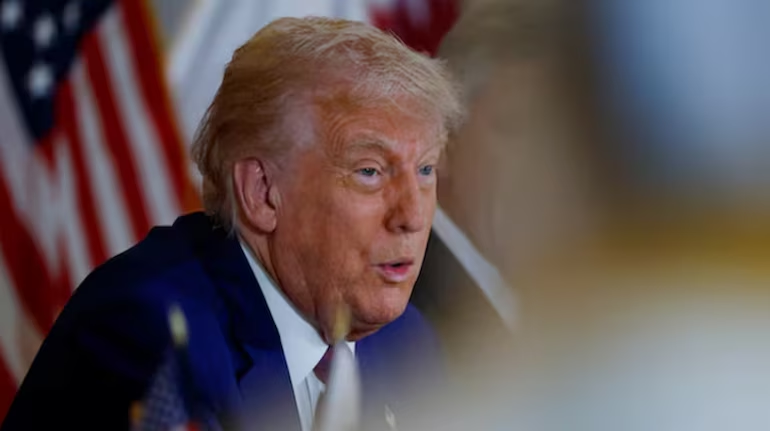
When US President Donald Trump announced the steepest tariff hikes in nearly a century in April, the American economy became the centre of a fierce debate. The White House and its allies projected a revival of domestic manufacturing, millions of new jobs, and faster economic growth. On the other side, economists and business leaders warned of runaway inflation and an impending recession.
Eight months on, neither extreme narrative has fully materialised, according to a report by The Wall Street Journal.
Economy Holds Up, but Tariff-Led Revival Remains Elusive
While concerns of an immediate recession have faded, the sweeping economic renaissance promised through tariffs has also failed to emerge. Inflation has not surged dramatically, and economic growth has remained resilient—but largely due to factors unrelated to tariffs, such as consumer spending and broader macro stability.
Although some federal data releases have been delayed, the overall picture is clearer than it was in April. The US economy has proven more durable than pessimists expected, yet tariffs have not delivered the manufacturing boom that was heavily marketed.
Jobs Picture: Stability Without a Surge
A central claim of the tariff policy was that it would protect domestic industry and generate millions of jobs. Critics argued that higher input costs and weaker demand would instead hurt employment. The outcome so far has been mixed.
Payroll growth has continued, including a stronger-than-expected addition of 119,000 jobs in September, though that figure appears to be an outlier amid generally softer job gains earlier in the year. By September, the unemployment rate rose to 4.4%, the highest level in four years.
Manufacturing employment has also struggled. Since Trump took office, the sector has shed around 54,000 jobs, underscoring the difficulty of linking tariffs directly to job creation. The Wall Street Journal highlighted Kent International as a case in point, where higher tariffs on Chinese bicycle components contributed to the closure of a South Carolina factory, even as the company continued importing finished bicycles.
Tariffs: Economic Shield or Structural Drag?
So far, tariffs have neither collapsed the US economy nor sparked the industrial resurgence their supporters promised. Instead, they have added complexity to business decisions, raised costs in some sectors, and delivered uneven outcomes across industries.
As more data becomes available, economists say the long-term impact of Trump’s tariff strategy will become clearer. For now, the evidence suggests a US economy caught between resilience and unrealised ambition, with tariffs proving neither the disaster feared nor the miracle cure promised.
Keywords: Trump tariffs impact, US economy tariffs, US jobs data 2025, manufacturing jobs US, tariff policy analysis, Wall Street Journal US economy, inflation and tariffs
